





Best Graphic Design Agencies in 2026

The best graphic design agencies depend on what you need to create: a visual identity, a campaign system, sales materials or a reliable flow of branded assets. This guide compares 10 partners through published work and service descriptions. Some develop a new visual language; others help an established brand produce consistent materials. Start with the deliverable, then compare the evidence, scope and commercial model behind each recommendation.

Research checked: 30 October 2026.

Quick Shortlist

Compare Pentagram for identity systems, COLLINS for expressive visual language and Fivecube for graphic assets supporting a business across digital and print. PORTO ROCHA and Koto offer useful references for flexible systems. For recurring production, examine the published models of Focus Lab and Superside; for an animated explanation, review BUCK.

Compare Graphic Design Agencies and Companies

Graphic design covers several kinds of work. A logo system, an event campaign and a month of marketing production require different decisions and deliverables. The examples below establish a specific contribution or published capability, not a claim that every agency offers the same service.

AgencyUseful project fitEvidence reviewedPublished budget reference
1. PentagramIdentity systems and visual consistencySlack identityNot publicly disclosed in reviewed material
2. COLLINSExpressive identity and typographySan Francisco SymphonyNot publicly disclosed in reviewed material
3. FivecubeGraphic assets for digital and printPublished graphic design servicesNot publicly disclosed in reviewed material
4. MuchoIdentity systems across applicationsVisaNot publicly disclosed in reviewed material
5. PORTO ROCHAFlexible campaign graphicsNike RunNot publicly disclosed in reviewed material
6. KotoConnecting product and marketing visualsWhatsApp systemNot publicly disclosed in reviewed material
7. Ragged EdgeRebrand application and visual languageWiseNot publicly disclosed in reviewed material
8. Focus LabB2B identity and brand activationLaunchDarkly and published servicesDelivery Retainer from $5,000/month; confirm scope
9. BUCKIllustration-led animated storytellingHeadspace filmNot publicly disclosed in reviewed material
10. SupersideOngoing creative productionPublished subscription modelSubscriptions from $15,000/month on annual term

These are different buying models. A delivery retainer and an annual subscription are not equivalent to a fixed identity project. Confirm capacity, creative scope, licensing and complete commercial terms directly.

10 Graphic Design Companies Reviewed

1. Pentagram

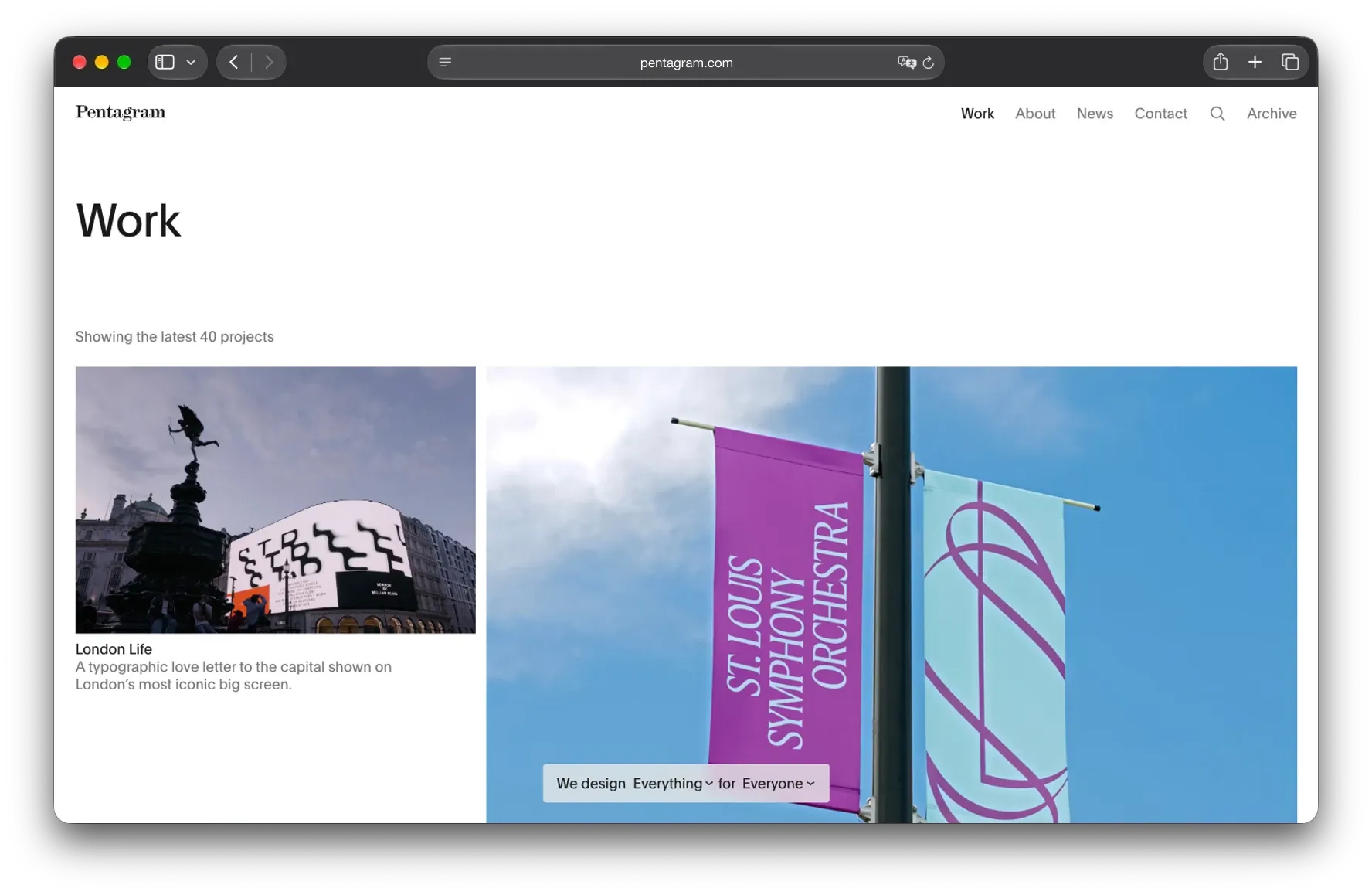
Pentagram Work page in a browser window: white page with the Pentagram wordmark, a menu of Work, About, News, Contact and Archive, the heading “Work” and two project images: a big screen at Piccadilly Circus captioned “London Life” and St. Louis Symphony Orchestra street banners.

Pentagram’s Slack identity case illustrates a graphic design problem that extends beyond creating a recognizable mark. The work addresses how an identity behaves at different sizes and across applications. It is a useful reference when an existing brand needs a clearer, more consistent visual system.

For a comparable project, ask the agency to demonstrate small and large uses, monochrome versions and everyday layouts. The identity should remain understandable when it is removed from a carefully art-directed presentation. Discuss the applications your team produces most often, not only the ones that will appear in a launch announcement.

Consider Pentagram when the central deliverable is an identity with rules that can travel across formats. Confirm which partner and team would lead the engagement, how many applications are included and how your internal designers will use the result. The Slack case is evidence of a specific identity contribution, not ownership of every part of the product.

Relevant contribution: visual identity and application consistency. Budget: request a project proposal.
2. COLLINS

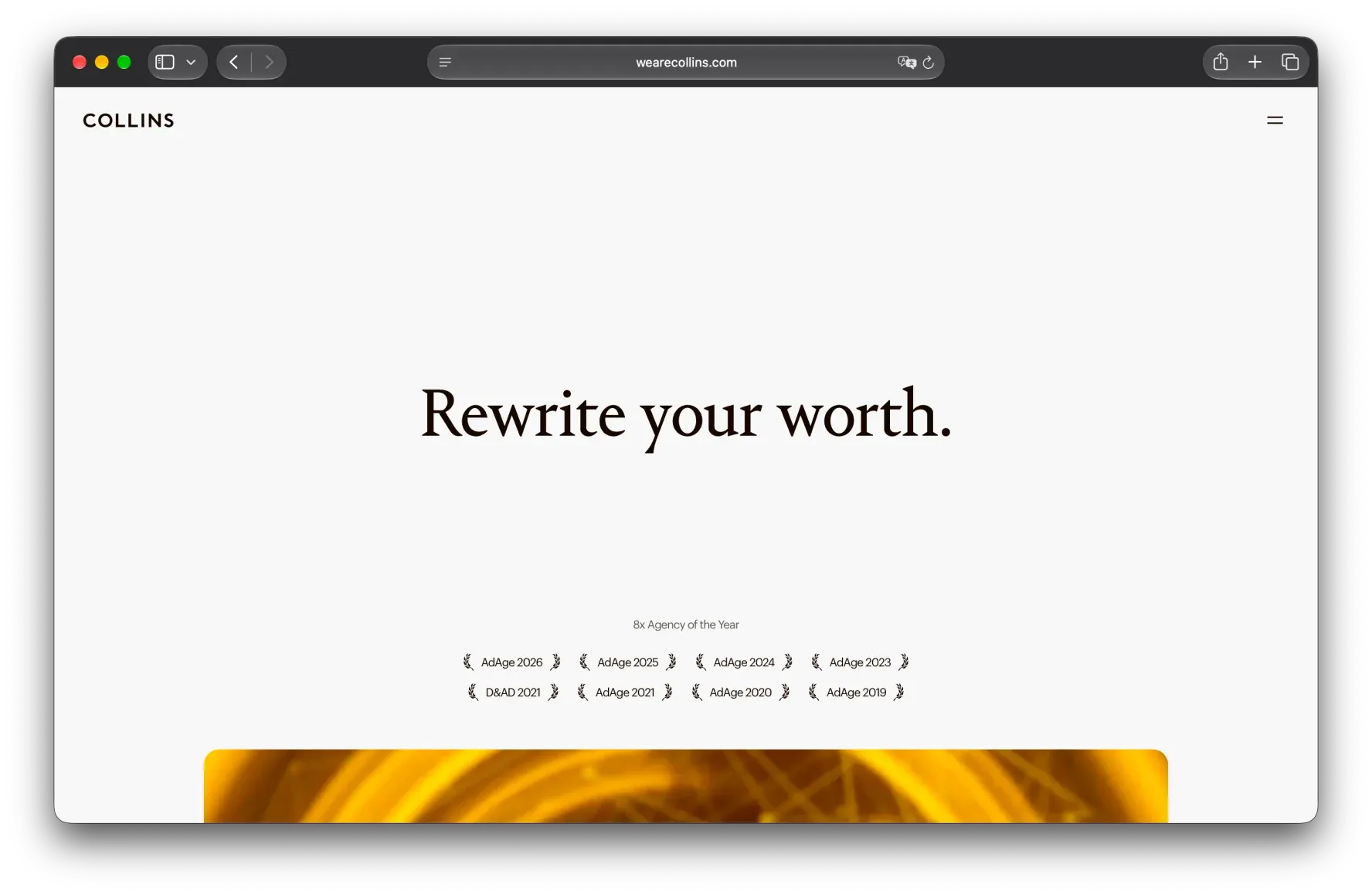
COLLINS homepage in a browser window: pale page with the large serif headline “Rewrite your worth.”, a list of AdAge and D&AD award laurels and a yellow image strip below.

COLLINS’ San Francisco Symphony case demonstrates an expressive graphic system built around typography, color and movement. Its published account describes using variable typography that can respond to sound, connecting the visual language with the subject of the organization’s work.

The example is relevant when an identity must convey a changed creative direction, rather than simply tidy existing assets. Ask how the system can be used in routine communications as well as distinctive launch materials. A successful concept needs usable rules for people preparing a poster, a presentation or a smaller digital placement.

Consider COLLINS when you need a strong visual idea and the guidance to extend it. Establish which static and moving applications the project includes and who produces them after handoff. The case describes the agency’s stated design work; it does not establish a likely audience or commercial result for your organization.

Relevant contribution: expressive identity, typography and visual language. Budget: not publicly disclosed in the reviewed case.

3. Fivecube

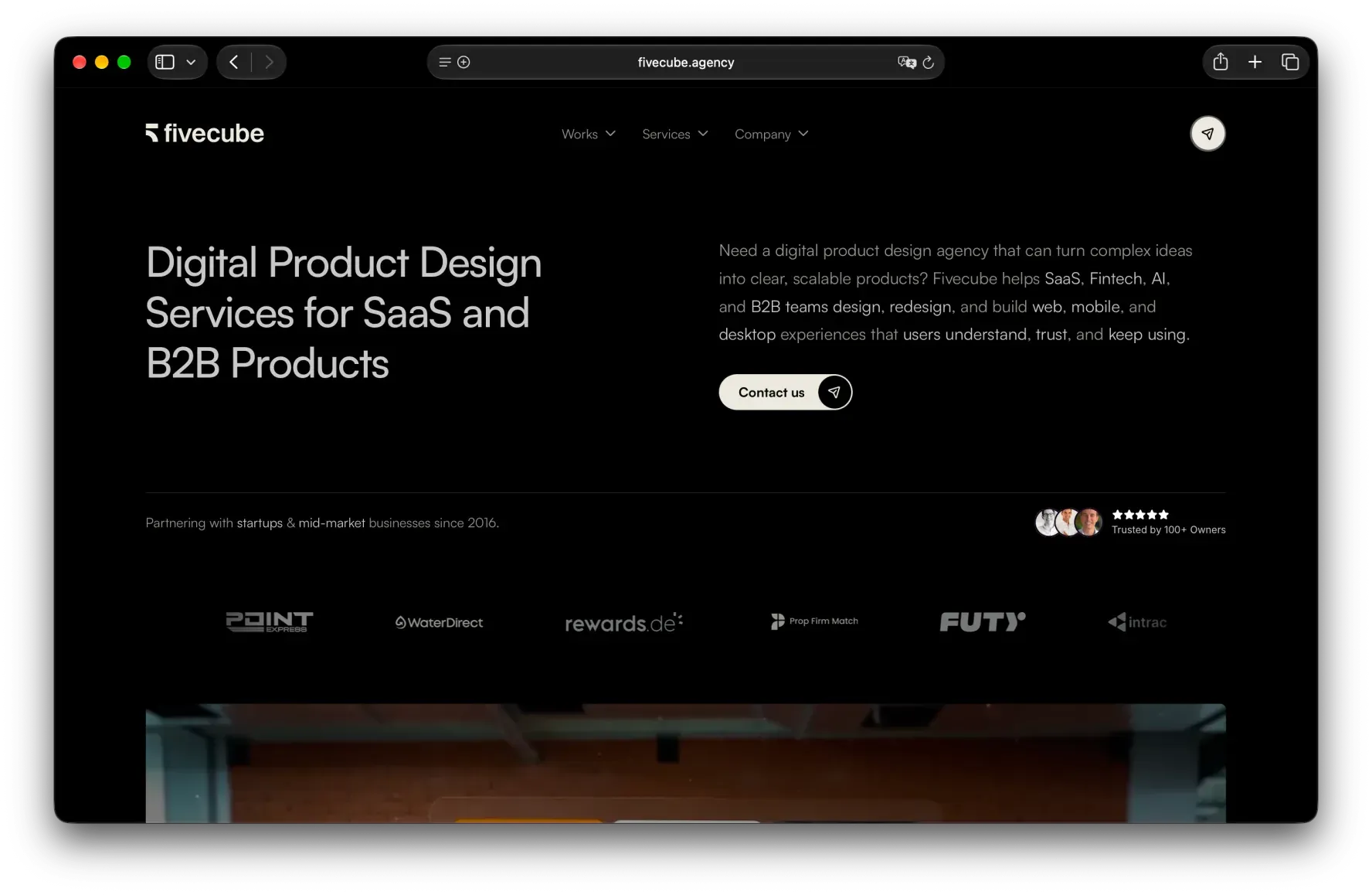
Fivecube homepage in a browser window: black page with the headline “Digital Product Design Services for SaaS and B2B Products”, a Contact us button and a row of client logos.

Fivecube publishes graphic design services covering logos, brand guidelines, custom illustrations, icons and marketing materials for digital and print. That gives a buyer a relevant scope to discuss when the requirement is a set of business-facing graphic assets rather than a full strategic rebrand.

This recommendation is based on its service offering, not a verified packaging or print-production case. Ask for recent examples matching the deliverables you need. A presentation deck, a set of website illustrations and a printer-ready brochure involve different production requirements even when the same team designs them.

Consider Fivecube when you want graphic work connected to a wider digital presence. Bring the existing identity, real copy, target formats and the tools your team uses. Confirm which assets remain editable and whether the proposal includes print preparation or website implementation. Those responsibilities should be specified instead of inferred from a general service label.

Relevant published services: identity assets, illustration, icons and marketing design. Budget: request a scoped proposal.

4. Mucho

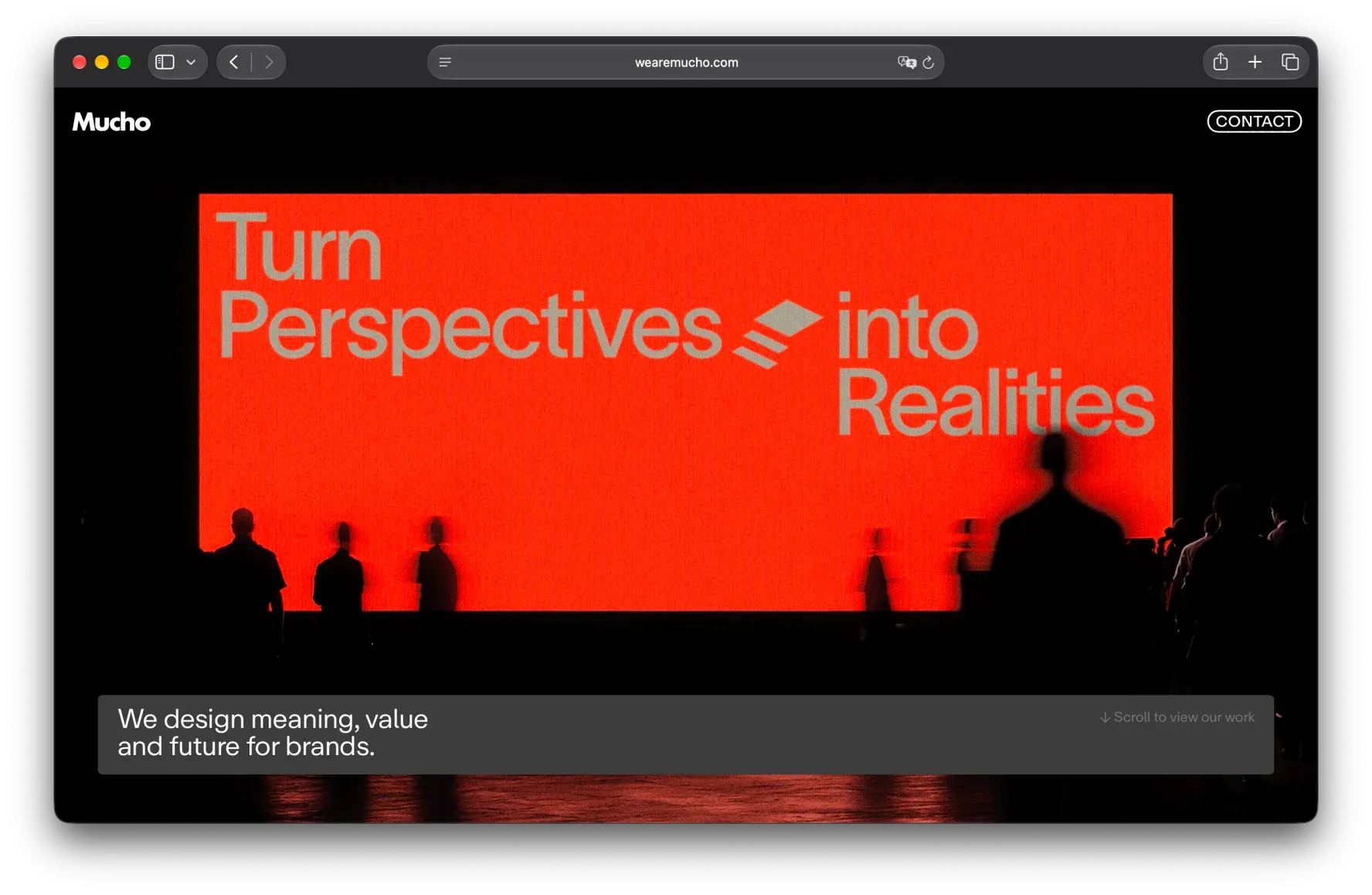
Mucho homepage in a browser window: black page with a large red screen reading “Turn Perspectives into Realities” in front of silhouetted people, and the line “We design meaning, value and future for brands.”

Mucho’s Visa case describes an identity system developed in collaboration with the client, with brand identity, motion, strategy and type design listed among the services. The example is relevant when a well-known visual identity needs a broader language across many applications.

For a buyer, the useful question is how a system holds together without repeating the logo on every surface. Ask the agency to demonstrate typography, layout, color and movement as a connected set. Specify the materials your teams actually use and how the guidelines will support different content and audiences.

Consider Mucho for a visual system with substantial application needs. Confirm the project’s strategy component, production outputs and governance. The published case credits a collaboration with Visa; it should not be treated as proof that one supplier independently owned every research or rollout activity. Review the precise contribution you are commissioning.

Relevant contribution: identity, type design and motion within a broader system. Budget: request a project-specific proposal.

5. PORTO ROCHA

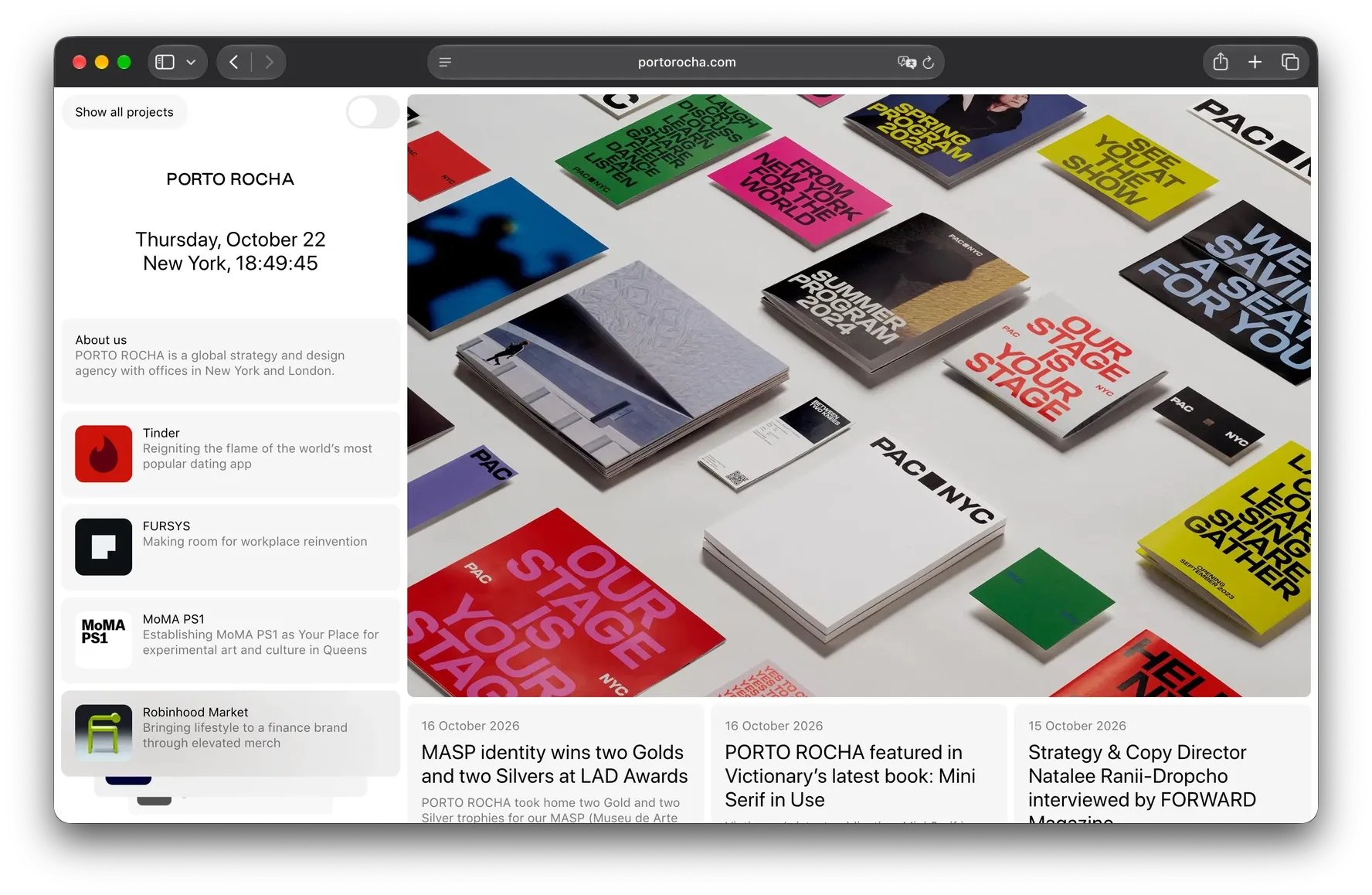
PORTO ROCHA homepage in a browser window: a light sidebar with the PORTO ROCHA name, the date and New York time, an About us blurb and a project list (Tinder, FURSYS, MoMA PS1, Robinhood Market) next to a large photo of colourful PAC NYC posters and brochures, with three news cards below.

PORTO ROCHA’s Nike Run work provides a reference for graphic design that behaves as a campaign system rather than a single isolated layout. It is relevant when a brand needs an expressive language that can be adapted across a family of materials.

Study the relationship between the core visual rules and the different executions. For your own brief, ask which elements should stay fixed and which can change for a new message, market or format. A campaign can be visually varied while remaining recognizable, but the rules must be clear enough for later production.

Consider PORTO ROCHA when art direction and a flexible graphic vocabulary are central to the project. Request examples close to the actual channels you need and identify responsibility for copy, imagery, motion and adaptation. The Nike Run example supports a discussion of visual work, not an assumption that every media-buying or campaign operation is included.

Relevant contribution: campaign expression and visual systems. Budget: not publicly disclosed in the reviewed material.

6. Koto

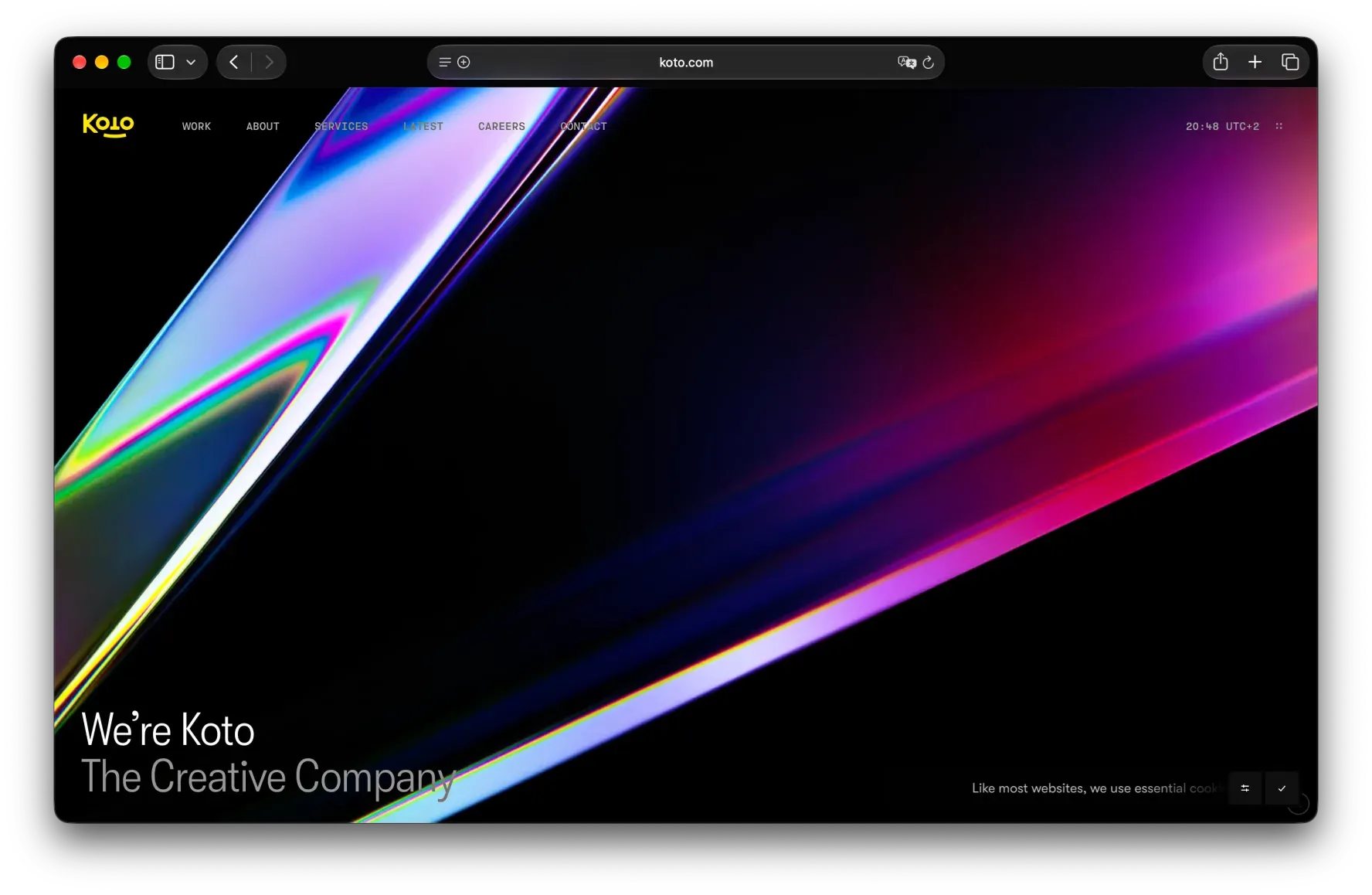
Koto homepage in a browser window: black background with a diagonal band of iridescent purple and blue light, the line “We’re Koto, The Creative Company” and a top menu with Work, About, Services, Latest, Careers and Contact.

Koto’s published WhatsApp case describes a design system intended to connect product and marketing communication. It is useful when the same brand appears inside a digital service and across external materials, but the two experiences have begun to feel disconnected.

For a comparable engagement, gather examples from both sides: interface-related graphics, announcements, campaign assets and supporting communication. Ask the agency how the system will handle those uses without forcing every format into an identical layout. Identify the standards that need to be shared and the variation that remains useful.

Consider Koto for a broad graphic language spanning a product ecosystem. Confirm where the identity work ends and application production begins. A brand design system does not automatically include a coded UI component library or changes to the core application. Those outputs require their own scope, ownership and implementation agreement.

Relevant contribution: a system linking product and marketing expression. Budget: request a proposal for the specified applications.

7. Ragged Edge

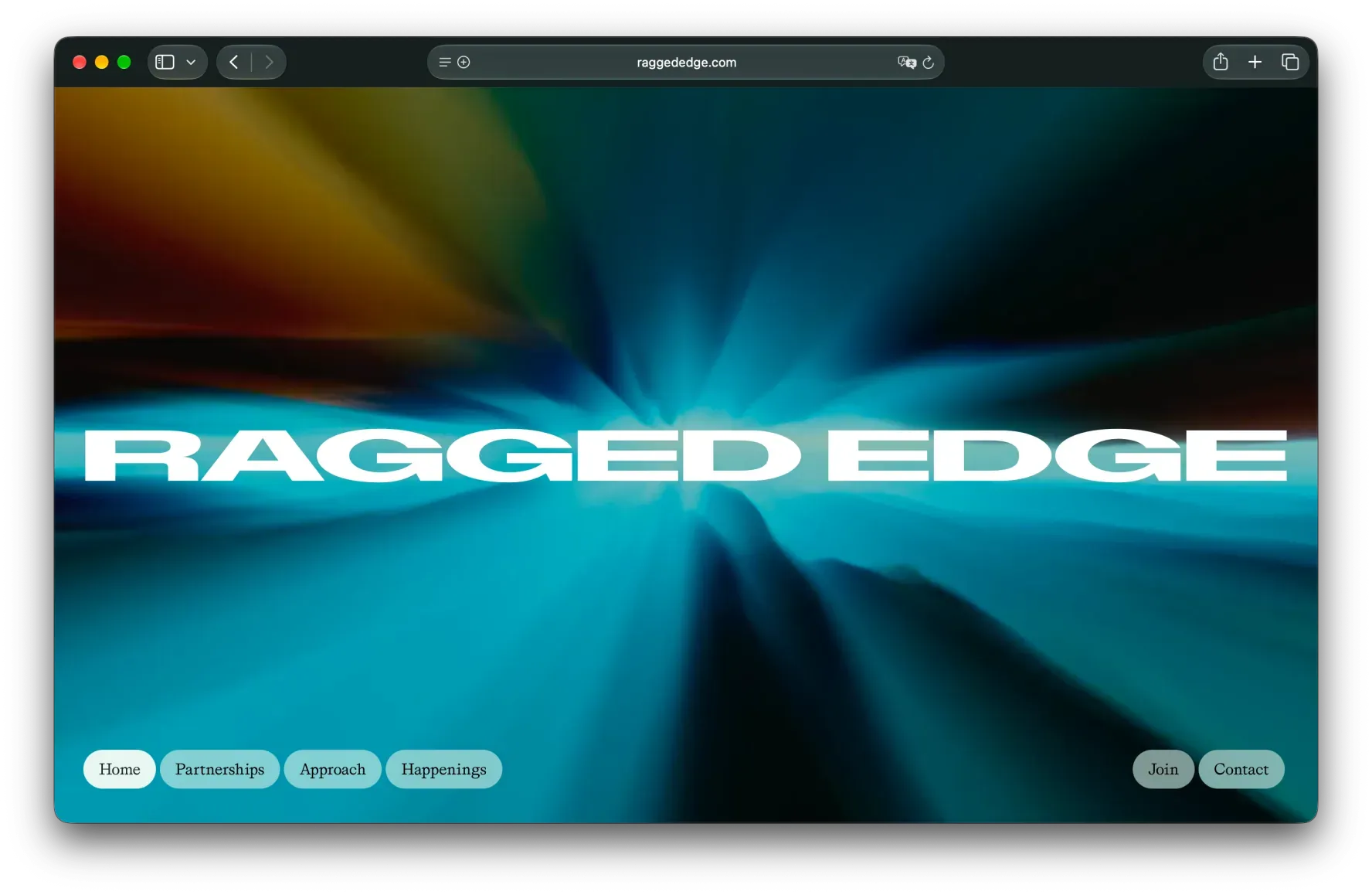
Ragged Edge homepage in a browser window: a teal and amber blurred light-burst background with the wide wordmark RAGGED EDGE and pill menu buttons Home, Partnerships, Approach, Happenings, Join and Contact.

Ragged Edge’s Wise case connects a rebrand with a visual and verbal language and its application across the business. The published account describes collaboration with the client team, making it relevant when new graphics must fit a broader change in how the organization presents itself.

For a graphic design brief, separate the core identity decisions from the production that follows. You may need a new system, adaptation of an approved direction or a continuing stream of materials. Ask which of those workstreams the proposed engagement covers and how the internal team will take it forward.

Consider Ragged Edge when inconsistent materials reflect a larger positioning or identity problem. Bring examples that show where the current system breaks down, rather than only references you like. Agree on templates, training and rollout responsibilities. The Wise account is evidence of that collaboration, not a guarantee of the same scope or business effect elsewhere.

Relevant contribution: rebrand expression and application. Budget: not publicly disclosed in the reviewed case.

8. Focus Lab

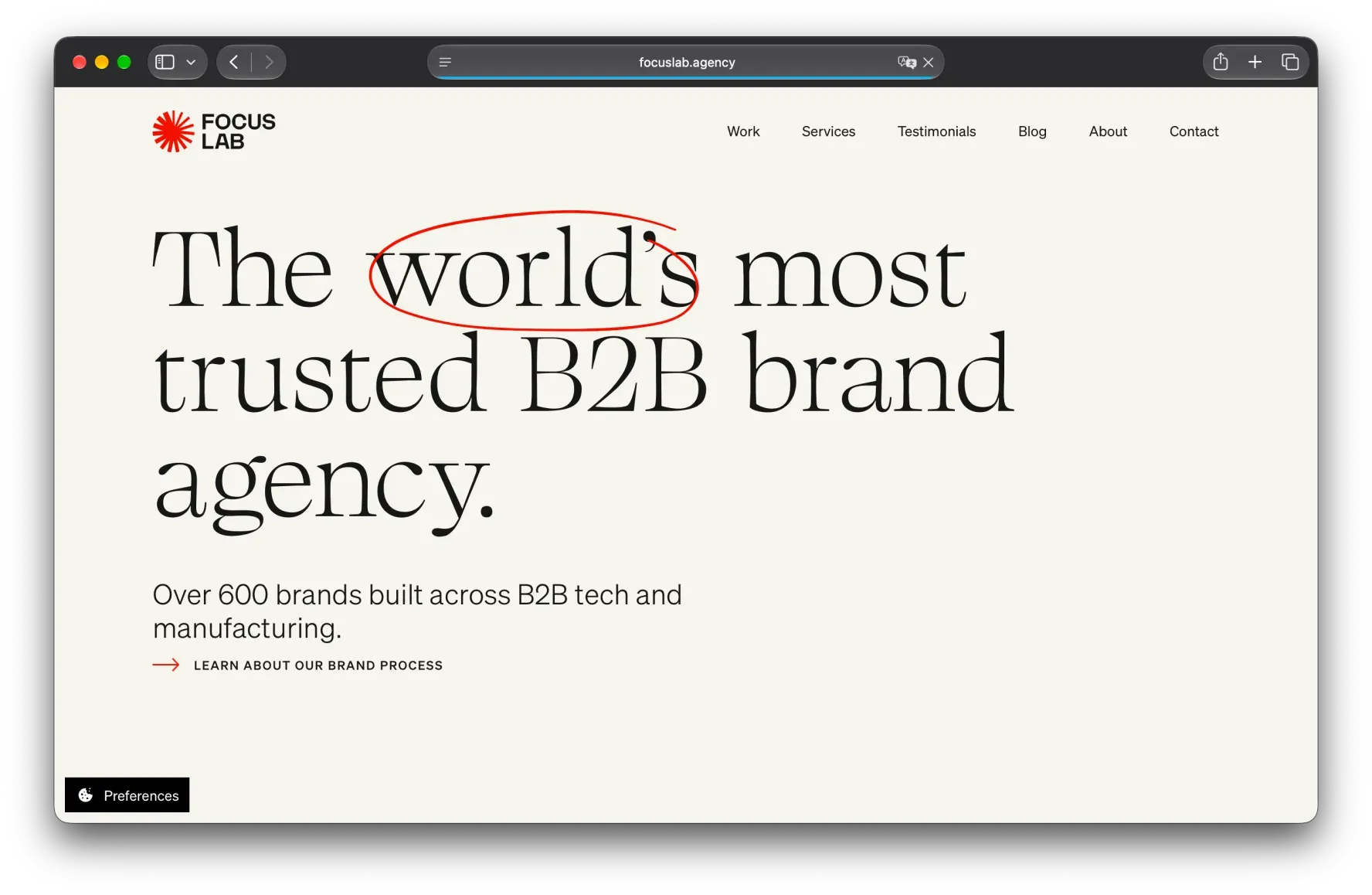
Focus Lab homepage in a browser window: cream page with the serif headline “The world’s most trusted B2B brand agency.” with “world’s” circled in red, and the line “Over 600 brands built across B2B tech and manufacturing.”

Focus Lab’s LaunchDarkly case provides a B2B identity example combining a professional presentation with a more distinctive visual direction. Its current services also separate brand-building engagements from ongoing activation and delivery, which is useful when choosing between a new identity and production support.

For graphic materials, the published Delivery Retainer includes examples such as social assets, slide templates, digital ads and sales enablement. At the review date, it started at $5,000 per month. This is a specific delivery model, not a price for a complete rebrand or an assurance that every requested item is included.

Consider Focus Lab when a B2B team needs either a clear identity or a defined way to keep applying it. Ask which model matches the problem, what capacity is available and how work is prioritized. Give the team real sales and marketing examples so the proposal addresses practical production rather than only launch visuals.

Relevant contribution: B2B identity, visual systems and brand activation. Budget: confirm the chosen program and current terms.

9. BUCK

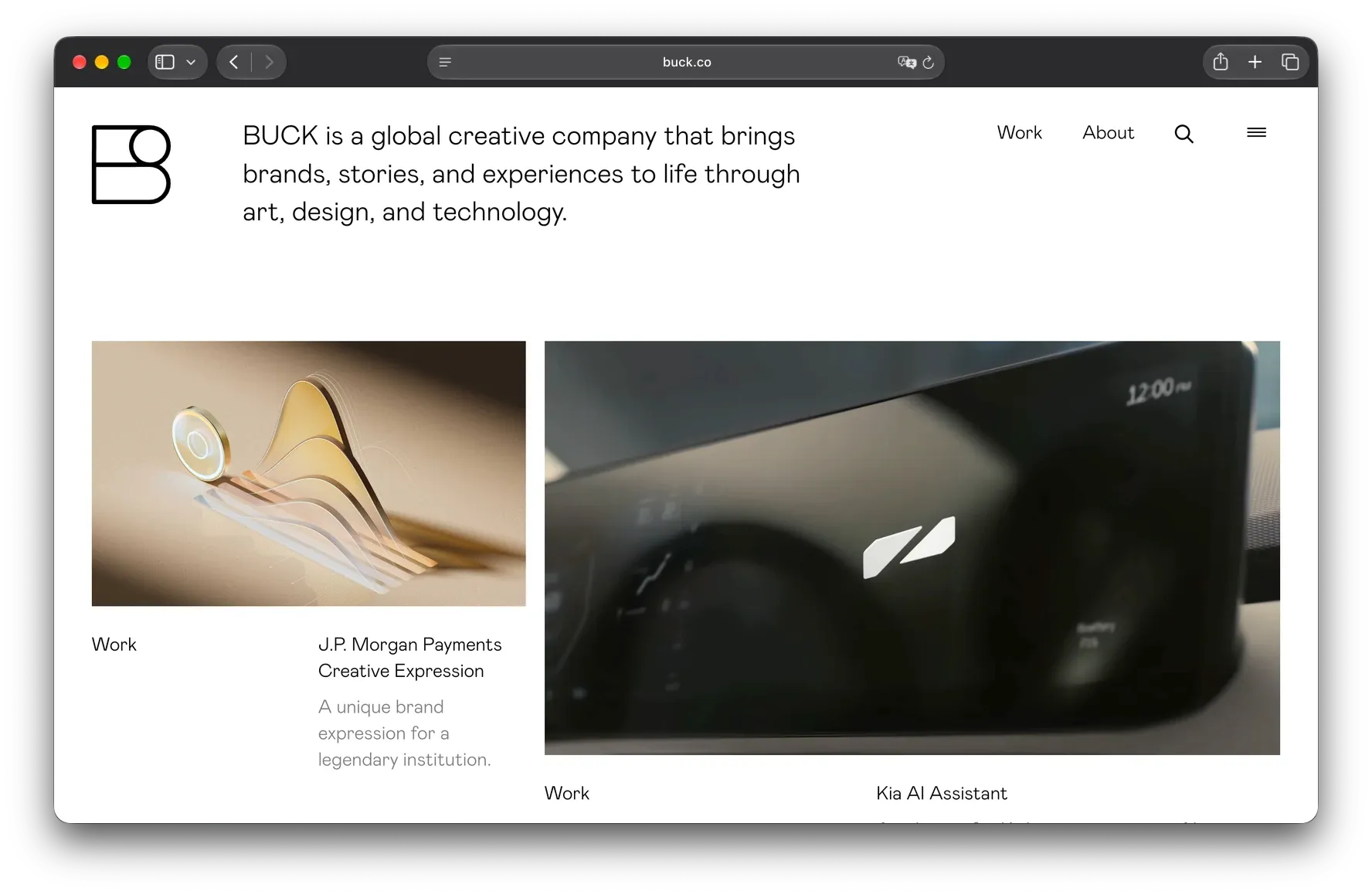
BUCK homepage in a browser window: white page with the black outlined B logo mark, the line “BUCK is a global creative company that brings brands, stories, and experiences to life through art, design, and technology.”, Work and About links, and two project images below: a golden 3D sculpture captioned “J.P. Morgan Payments Creative Expression” and a dark car display screen captioned “Kia AI Assistant”.

BUCK’s Headspace film demonstrates graphic storytelling through characters, shape language and animation. The case describes presenting meditation benefits in a short narrative. It is relevant when a static graphic explanation may not communicate the idea as effectively as a moving sequence.

Consider BUCK for a focused visual story or a campaign requiring designed animation. Clarify whether the engagement begins with a supplied script or includes concept development. A set of illustrations, an animated film and a library of reusable assets have different approval and production requirements.

Ask for the outputs, aspect ratios, durations, source files and rights required for the intended placements. If a marketing team will adapt the work later, define how those adaptations are supported. The Headspace example establishes a film contribution; it does not demonstrate that BUCK designed the underlying application or a complete ongoing marketing program.

Relevant contribution: design, illustration-led storytelling and animation. Budget: request production and usage terms.

10. Superside

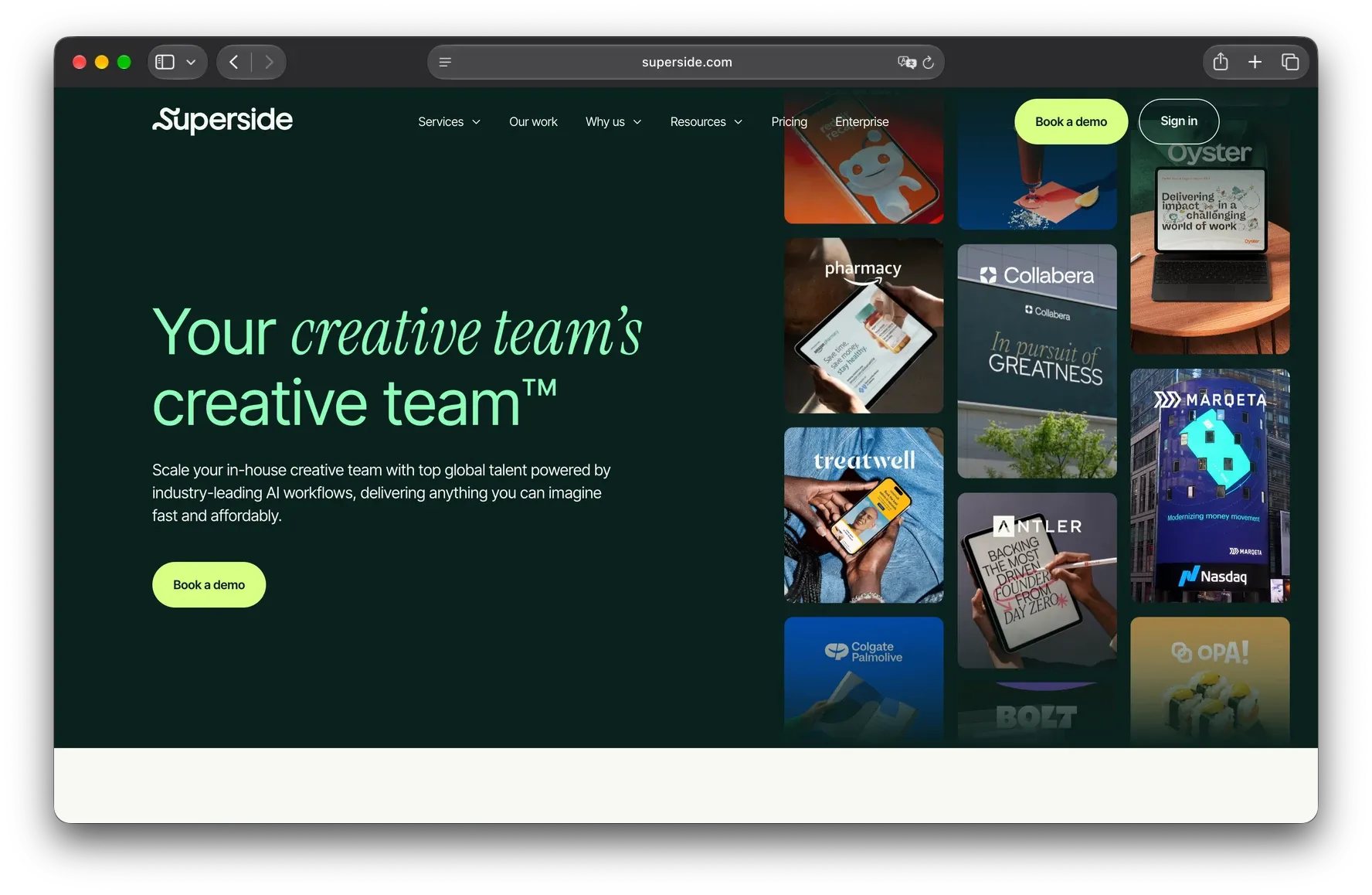
Superside homepage in a browser window: dark green page with the Superside logo, a menu of Services, Our work, Why us, Resources, Pricing and Enterprise, the mint headline “Your creative team’s creative team™”, a short paragraph, a Book a demo button and a column grid of client campaign images such as Collabera, Marqeta, Treatwell and Antler.

Superside offers creative support through a subscription model. It is relevant when a marketing organization has recurring demand across formats and needs a defined production relationship rather than a single identity presentation. Its published design-system guidance also discusses making shared resources useful across teams.

Begin with an estimate of the work you will send: social graphics, presentations, campaign adaptations and other approved formats. Ask how priorities, creative direction and specialist requests are handled. A subscription does not make every possible request equally suitable or remove the need for a useful brief.

The reviewed pricing page states a $15,000 monthly minimum on an annual subscription term. Confirm software charges, capacity, additional project budgets and cancellation terms directly. Compare that commitment with your expected workload, rather than treating it as a standard quote for a logo or brochure.

Relevant use case: ongoing graphic production and creative support. Budget: published subscription minimum; complete terms require confirmation.

Which Graphic Design Service Do You Need?

Graphic Design Agency Comparisons

Fivecube vs Focus Lab

ComparisonFivecubeFocus Lab
EvidencePublished graphic design offeringLaunchDarkly identity and current delivery programs
Relevant questionWhich assets can support our existing business identity?Do we need identity work or ongoing activation?
ConfirmExamples, files, formats and production scopeProgram, capacity, priorities and terms

Compare Fivecube when the brief is a defined group of graphic assets with related digital needs. Compare Focus Lab when the choice between identity development and a published delivery program is central. Confirm actual outputs before treating the commercial models as equivalent.

Pentagram vs COLLINS

ComparisonPentagramCOLLINS
Reviewed exampleSlack identitySan Francisco Symphony
Useful emphasisConsistency and reproduction across usesExpressive typography and visual language
ConfirmTeam, identity scope and applicationsStatic and motion applications, guidance and rollout

The Slack example is useful for examining recognizable assets and their consistent application. The Symphony example is useful for examining a more expressive creative system. Use the comparison to frame questions, not to declare one agency better for every brief.

Koto vs PORTO ROCHA

ComparisonKotoPORTO ROCHA
Reviewed exampleWhatsApp systemNike Run
Relevant needConnect product and marketing expressionDevelop adaptable campaign graphics
ConfirmShared rules, application scope and ownershipCreative concept, variants and production responsibilities

Both references demonstrate the value of a system that can produce varied work. Koto’s example connects brand expression across contexts; PORTO ROCHA’s supports a campaign-oriented discussion. Match the reference to your own materials and ask to see how the system will be used by the people producing them.

What Should a Graphic Design Agency Deliver?

Agree on the decisions and working files, not just a list of attractive mockups. The right handoff depends on whether you are buying an identity, a production template or a finished asset.

DeliverableWhat to requestWhy it matters
Identity assetsVector marks, variants and usage rulesReproduction across sizes and formats
Typography and colorSpecifications and licensing responsibilitiesConsistent application without unclear rights
Marketing templatesEditable source files in agreed toolsRoutine updates by the receiving team
Print materialsAgreed production specifications and proof processAlignment with the chosen printer
Digital graphicsExports, variants and readable layoutsAppropriate use across intended placements
Illustration and motionMasters, formats and usage agreementReuse, adaptation and ownership
Guidelines and handoffExamples, instructions and a working sessionPractical adoption after delivery

For print, involve the printer before final production and confirm the specifications for the job. For digital graphics, check text at the actual display size. An exported image that looks clear in a presentation may become difficult to read in its intended placement.

Graphic Design Agency Pricing and Costs

Graphic design agency pricing depends on whether you are buying a new visual system, a defined production project or recurring support. The reviewed providers do not publish a common comparable rate. This guide does not assign invented prices to agencies that require an individual brief.

Focus Lab lists a Delivery Retainer from $5,000 per month for ongoing branded execution. Superside lists subscriptions from a $15,000 monthly minimum on an annual term. These figures describe different programs; they do not establish that one provider charges less for the same work. Confirm complete terms, available capacity and exclusions.

For a project quote, separate concept development, design, adaptations, production preparation and licensing. Define the number of deliverables and the process for changes after approval. A collection of resized assets based on an approved direction is different from creating a new idea for each placement.

Consider the work left with your own team. Copywriting, translation, image sourcing, printing and implementation may require separate owners. A clear proposal should explain which costs are included and which remain necessary to complete the launch.

How to Choose a Graphic Design Agency

Begin with the communication problem and the materials that need to change. For example, sales presentations may be inconsistent, a campaign may lack a recognizable language, or an identity may fail at small sizes. Those problems lead to different briefs and different ways to judge the result.

Review examples of the actual deliverables you need. Packaging mockups do not prove print-production experience, and a website case does not establish skill in a long presentation deck. Ask what the agency owned, which parts came from collaborators and which team would handle your project.

Use real content during the selection and design process. A template with a short headline and perfect photography may fail with normal business material. Show charts, long names, different image ratios and a realistic translation so the system is assessed under ordinary conditions.

Finally, agree on ownership, editability and a review process. Establish who approves concepts, how feedback is consolidated and how later changes are priced. A useful graphic system should help the people who maintain it, not only impress the team at the first presentation.

How We Selected and Compared These Agencies

This editorial selection uses official service descriptions and project accounts checked on 30 October 2026. Fivecube is described through its published graphic services, while the other profiles identify a relevant case or commercial offering. We distinguish identity development, campaign systems, motion and recurring production.

The order is an editorial selection rather than a customer-review score. We did not commission a common test project, audit every reported result or verify current capacity. No star ratings are assigned. Published cases describe past contributions and should not be treated as evidence of current client relationships.

Prices refer to the named program on the review date and require confirmation. Source links beside profiles identify the basis of each recommendation. Buyers should request a proposal matching their own scope, formats and licensing requirements.

Frequently Asked Questions

What Does a Graphic Design Agency Do?

A graphic design agency creates visual communication such as identities, layouts, illustrations, marketing materials and campaign graphics. Some also provide motion or implementation. Confirm whether the brief includes a new creative direction, production from existing guidelines or both.

How Is Graphic Design Different from Branding?

Graphic design concerns visual communication. Branding can also include positioning, audience research, naming and verbal identity. Graphic design may be one part of a branding engagement, but a brochure or illustration project does not automatically require a full rebrand.

Can One Agency Handle Print and Digital Materials?

Some agencies publish both capabilities, including Fivecube. Ask for examples matching the required formats and confirm production responsibilities. Print specifications, licensing and digital adaptations should be defined in the proposal rather than assumed from a general capability statement.

Which Agencies Should a B2B Team Consider?

Fivecube publishes relevant marketing and illustration services, while Focus Lab provides B2B identity evidence and activation programs. Superside is relevant to investigate for recurring creative demand. Compare the actual deliverables, volume and working model before selecting a partner.

How Much Do Graphic Design Agencies Charge?

There is no verified common rate across this guide. Focus Lab lists a Delivery Retainer from $5,000 per month; Superside lists a $15,000 monthly subscription minimum on an annual term. These are different programs, so obtain a complete current quote for your own scope.

Will I Receive Editable Design Files?

Only if the agreement includes them. Specify native source files, linked assets, editable templates and licensing responsibilities before work begins. Confirm which tools your team can use and whether later adaptations are permitted. A final PDF or image export does not replace an editable master.

Sources and Updates

The official material linked beside each profile supports the described service, project or program. Public offerings and prices can change. Use this guide to the best graphic design agencies to create a shortlist, then confirm the team, deliverables and current commercial terms directly.